

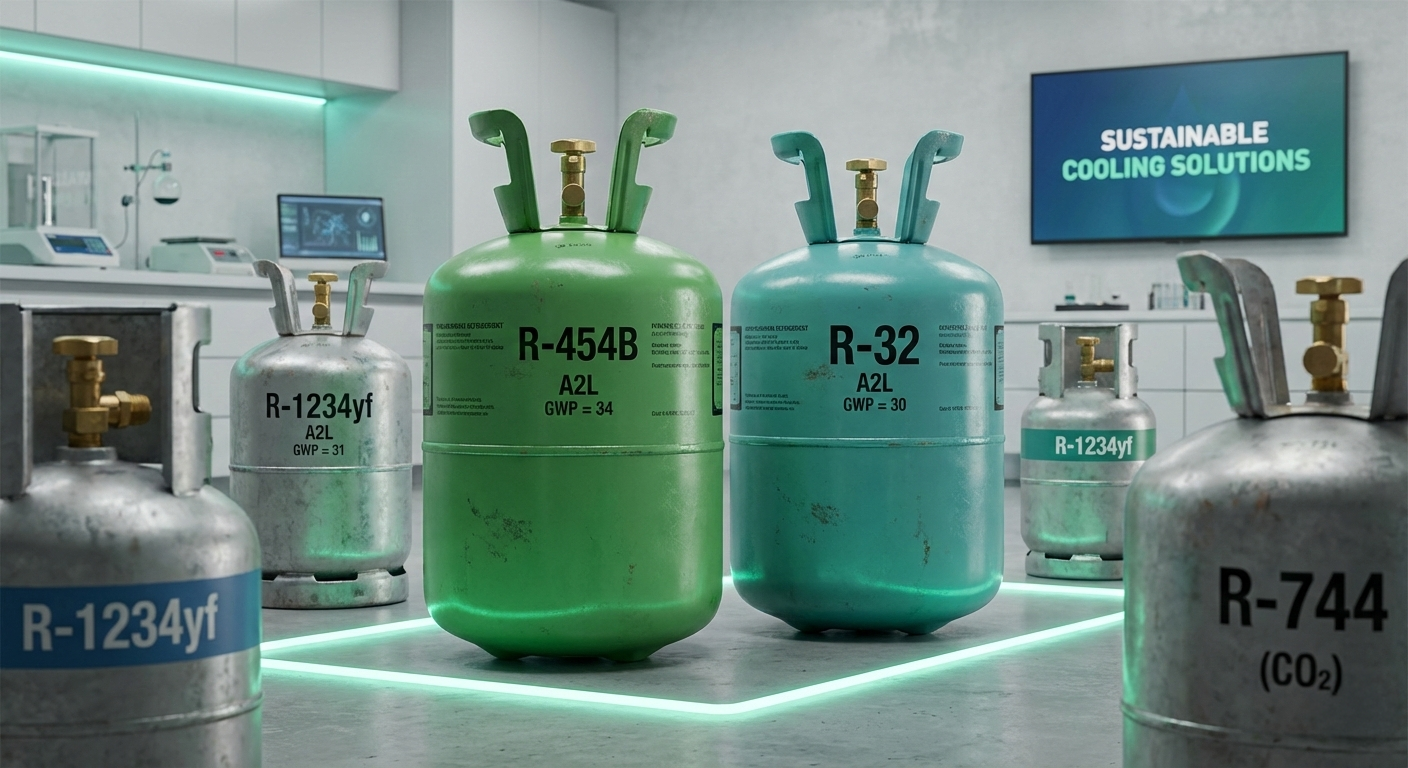
What HVAC-R professionals need to know as the industry evolves
The HVAC-R industry is entering one of the most significant transitions in its history. Refrigerants that have defined installation and service work for decades are being phased out, while new alternatives—designed for lower environmental impact—are becoming the standard.

For HVAC-R professionals, this shift isn’t theoretical. It’s already changing how systems are installed, serviced, and maintained. Understanding where refrigerants are headed—and how to prepare for that future—is no longer optional. It’s part of doing professional work in a modern industry.
Why Refrigerants Are Changing
Refrigerants don’t disappear because they stop working. They’re phased out because of environmental impact, specifically Global Warming Potential (GWP).
Older refrigerants like R22 were eliminated due to ozone depletion. More recent refrigerants such as R410A, while ozone-safe, still carry a high GWP. Global regulations and U.S. standards are now pushing the industry toward refrigerants with significantly lower environmental impact.
This is driving a new generation of refrigerants—and reshaping HVAC-R service practices along the way.
The Shift Away from R410A
R410A has been the industry workhorse for years. It’s efficient, reliable, and familiar to technicians. But its relatively high GWP places it squarely in the category of refrigerants being phased down.

Manufacturers are already transitioning new equipment away from R410A, and regulations are accelerating that shift. While R410A systems will remain in service for years, new installations are moving toward alternatives designed to meet stricter environmental requirements.
The takeaway for professionals is simple: R410A isn’t gone—but it’s no longer the future.
The Rise of A2L Refrigerants
The next generation of refrigerants largely falls under the A2L classification.

What Does A2L Mean?
-
A: Low toxicity
-
2L: Mild flammability with low burning velocity
This includes refrigerants such as:
-
R32
-
R454B
-
R1234yf
-
R290 (in specific applications)
A2L refrigerants are engineered to deliver strong performance with much lower GWP than legacy options. While the term “flammable” raises concerns, it’s important to understand that A2L refrigerants are designed to be safely used when proper procedures and tools are followed.
The industry shift isn’t about risk—it’s about responsibility and control.
What This Means for HVAC-R Technicians
New refrigerants bring new expectations in the field. The fundamentals of good HVAC work remain unchanged, but precision and discipline matter more than ever.
Key impacts include:
-
Updated safety standards and training
-
Stricter leak prevention
-
Greater emphasis on evacuation quality
-
Cleaner service practices
-
Compatibility awareness across refrigerants
Technicians who already follow best practices will find the transition straightforward. Those who cut corners will feel the difference immediately.
Why Tools Matter More in the New Refrigerant Era
As refrigerants evolve, so must the tools used to service them.
Modern HVAC-R work demands:
-
Accurate, multi-refrigerant gauges
-
Reliable low-loss hoses and fittings
-
High-performance vacuum pumps
-
Consistent evacuation and leak control
With A2L refrigerants, small mistakes matter more. Proper tools don’t just make the job easier—they help ensure safety, compliance, and long-term system performance.
This is where professional-grade equipment becomes essential, not optional.
Preparing for the Future: The Pro Mindset
The future of refrigerants isn’t something to fear—it’s something to prepare for.
Professionals who stay ahead of the curve will:
-
Invest in education and training
-
Use tools designed for modern refrigerants
-
Follow proper procedures every time
-
Adapt as standards evolve
The HVAC-R industry has always rewarded technicians who take pride in their work. That hasn’t changed. What has changed is the margin for error—and the value of preparation.
Looking Ahead
The refrigerants of tomorrow are already here. Systems are changing. Regulations are tightening. Expectations are rising.
For HVAC-R professionals, the path forward is clear: stay informed, stay equipped, and stay professional.
HCPRO is committed to supporting technicians through this transition with tools engineered for modern refrigerants, evolving standards, and real-world field demands—because the future of HVAC-R belongs to professionals who are ready for it.
Share:
How to Flush an HVAC System After Compressor Burnout (Step-by-Step Guide)